Understanding Continuous Wave: Principles and Applications
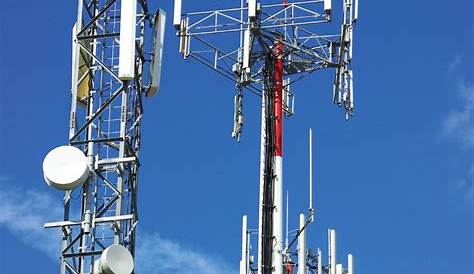
If you're struggling to understand continuous waves in your physics coursework, you're not alone. Continuous waves are defined as waves that maintain a constant amplitude and frequency over time, allowing for stable transmission of information. Unlike pulsed waves, which vary in intensity and duration, continuous waves provide a reliable signal essential for applications in communication systems and radar technology. Let's break down the concept of continuous waves, explore their real-life uses, and clarify how they differ from pulsed waves.
What exactly is a continuous wave?
A continuous wave propagates without interruption, characterized by a consistent amplitude and frequency. This means that the wave remains uniform in height and oscillates at a steady rate. For example, consider the sound produced by a tuning fork; the pitch remains constant as long as the fork is held. In contrast, pulsed waves exhibit variations in amplitude and frequency, similar to the sound of a drumbeat, where each hit creates a distinct sound peak followed by silence. Continuous waves are crucial in many applications because their stable characteristics allow for reliable signal transmission. It's a common misconception that continuous waves imply constant energy; the energy can vary depending on the source, even if the wave itself is continuous.
Where is continuous wave used in real life?
Continuous waves find widespread applications in various fields, particularly in telecommunications and radar systems. In radio broadcasting, continuous wave signals enable the transmission of audio content over long distances, with a consistent frequency that simplifies tuning into the station without distortion. In radar technology, continuous waves are used to accurately measure distances; the radar system emits a continuous wave signal and analyzes the reflected signals to determine the distance of objects such as airplanes or vehicles. Medical imaging also benefits from continuous wave technology, especially in ultrasound imaging, where these signals help create detailed images of internal body structures. These examples highlight the importance of continuous waves in facilitating effective communication and precise measurements.
How do continuous waves compare to pulsed waves?
Continuous waves and pulsed waves differ significantly in their behavior and applications. Continuous waves maintain a steady amplitude and frequency, while pulsed waves consist of short bursts of energy that vary in intensity and duration. This fundamental difference leads to distinct advantages and disadvantages for each type. Continuous waves can carry information over longer distances with minimal loss, making them ideal for communication systems. However, they may experience interference in crowded signal environments. In contrast, pulsed waves can provide more detailed information, particularly in radar and medical imaging, due to their ability to allow precise timing measurements. A common misconception is that continuous waves are always superior because of their stability; in some situations, the adaptability of pulsed waves can make them more effective. Each system has its advantages depending on the specific requirements of the application.
What challenges do continuous wave systems face?
Continuous wave systems face several challenges despite their advantages. One major concern is interference, which can occur when multiple signals overlap in the same frequency band, leading to signal degradation and loss of clarity. For instance, in crowded radio frequency environments, a continuous wave signal may blend with others, causing static or distortion. Another challenge is signal attenuation, where the strength of the wave diminishes over distance, particularly problematic in long-range communication where maintaining signal integrity is crucial. Additionally, continuous wave systems can be more susceptible to noise, complicating signal processing. Understanding these challenges is essential for developing robust systems that effectively utilize continuous wave technology.
How can I visualize continuous waves?
Visualizing continuous waves can enhance your understanding of the concept. One effective method is to use simulation software that allows you to manipulate wave parameters such as frequency and amplitude. Programs like PhET Interactive Simulations offer interactive models where you can see the effects of these changes on wave behavior. Graphical representations, such as sine wave graphs, are also helpful. By sketching a continuous wave, you can observe its consistent peaks and troughs. Watching videos or animations that depict wave propagation can further clarify how these waves travel through different mediums. Engaging with these resources makes the abstract concept of continuous waves more tangible.
Conclusion
To begin mastering continuous waves, focus on their fundamental characteristics and how they differ from pulsed waves. Utilize simulations or graphical representations to better understand their behavior. Avoid getting overwhelmed by complexities like interference or signal degradation initially; instead, build a strong foundation first. Once you grasp the basics, you'll find it easier to explore more advanced concepts and applications in your studies.
Frequently Asked Questions
What is the difference between continuous wave and carrier wave?
A continuous wave refers to any wave with a constant amplitude and frequency, while a carrier wave is a specific type of continuous wave that carries information, often modulated to encode data.
Can continuous waves be used for data transmission?
Yes, continuous waves are commonly used for data transmission, particularly in radio and telecommunications, where they carry information through modulation techniques such as amplitude modulation (AM) and frequency modulation (FM).
What is one disadvantage of continuous waves?
One disadvantage of continuous waves is their susceptibility to interference, especially in crowded frequency bands, which can degrade signal quality and make it challenging to extract clear information.
How does a continuous wave radar work?
Continuous wave radar operates by emitting a continuous wave signal and analyzing the frequency shift of the returned signal caused by the Doppler effect, allowing it to measure the speed and distance of moving objects.
Are continuous waves used in medical imaging?
Yes, continuous waves are utilized in medical imaging, particularly in ultrasound, where they help produce detailed images by sending continuous sound waves and analyzing the echoes that return from the body's internal structures.