What You Need to Know About Searches for Noah's Ark
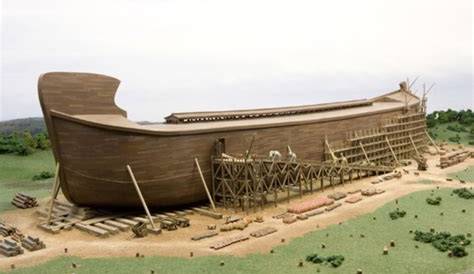
The search for Noah's Ark has intrigued explorers and historians for centuries, driven by its profound historical and cultural significance across various religions. The Ark symbolizes themes of survival and divine promise that resonate with many. As recent media portrayals have reignited interest, understanding the context and evidence surrounding the Ark's supposed location becomes increasingly relevant.
What sparked the recent interest in Noah's Ark?
Interest in Noah's Ark has surged due to various media representations that capture the public's imagination. Documentaries like "Finding Noah" and television shows focused on biblical archaeology have introduced the story to new audiences, prompting curiosity about the Ark's existence and possible location. Additionally, books exploring the Ark delve into religious, historical, and geological contexts. This fascination extends beyond the Ark itself, touching on themes of survival, faith, and the human experience. As individuals seek to understand their beliefs and history, the search for Noah's Ark remains a compelling narrative that resonates on multiple levels.
What evidence is there for the Ark's existence?
Evidence supporting the existence of Noah's Ark is largely circumstantial, derived from archaeological findings, ancient texts, and geological studies. Some researchers reference ancient Mesopotamian flood myths that parallel the story of Noah, suggesting a shared cultural memory. Archaeological expeditions in the vicinity of Mount Ararat—a prime candidate for the Ark's resting place—have claimed to discover wood and other materials indicative of a large vessel. Geological studies have also examined the possibility of a catastrophic flood in ancient times that may have inspired the Ark narrative. However, interpretations of this evidence vary, and skeptics urge caution against drawing definitive conclusions based on limited findings.
Who has searched for Noah's Ark and what did they find?
Notable expeditions searching for Noah's Ark include efforts led by Ron Wyatt and various Turkish government initiatives. In the late 20th century, Wyatt claimed to have discovered the Ark's remains on Mount Ararat, presenting images and artifacts as evidence. However, his assertions faced skepticism from the scientific community due to a lack of verifiable evidence and rigorous peer review. The Turkish government has also conducted searches, identifying specific sites as potential Ark locations, though these initiatives have encountered similar scrutiny. These controversies highlight the delicate balance between faith, archaeology, and sensationalism, making the search for Noah's Ark as much about belief as it is about empirical evidence.
How has technology changed the search for the Ark?
Modern technology has greatly impacted the search for Noah's Ark, enhancing the efficiency and detail of exploration. Satellite imagery helps researchers identify geographical features that might indicate the Ark's presence, allowing for targeted ground exploration. Drones equipped with high-resolution cameras can survey hard-to-reach areas, providing new perspectives on potential sites. Additionally, ground-penetrating radar has been employed to explore beneath the surface, revealing structures that could be remnants of ancient civilizations. While technology has opened new avenues for exploration, it raises questions about data interpretation and the risk of confirmation bias, where findings may be interpreted to align with preconceived notions of what the Ark should look like.
What are the implications of finding Noah's Ark?
The discovery of Noah's Ark would carry significant cultural, religious, and scientific implications. For many, it could affirm longstanding beliefs, strengthening faith narratives and potentially attracting millions to the site as a pilgrimage destination. From a scientific perspective, it would ignite discussions about the historical accuracy of biblical texts and ancient civilizations' understanding of catastrophic events. Public reactions would likely range from ecstatic believers to skeptical analysts, fueling scholarly debates about the evidence's authenticity and its broader implications for history and mythology. Thus, the search for the Ark transcends the pursuit of an artifact; it probes the essence of human belief and our understanding of history.
Conclusion
If you’re curious about the search for Noah's Ark, consider exploring the wealth of documentaries and literature that detail both historical accounts and modern expeditions. While the evidence remains contentious and speculative, the discussions surrounding the Ark’s existence are rich and varied. Engaging with these narratives adds depth to your understanding of its significance, both historically and in contemporary contexts. The true value lies not just in finding the Ark but in the conversations it inspires about faith, history, and human resilience.
Frequently Asked Questions
What is the significance of Noah's Ark in different cultures?
Noah's Ark is significant across cultures as a symbol of survival and divine promise. In Judaism and Christianity, it represents God's covenant with humanity, while in Islam, it is recognized as a story of faith and obedience to God. These narratives often reflect shared human experiences during crises.
Have any credible discoveries been made related to Noah's Ark?
While several claims regarding discoveries related to Noah's Ark have been made, none have gained universal acceptance in the scientific community. Most findings are considered circumstantial and often lack rigorous verification, leading to ongoing debates about their authenticity.
What role do modern technologies play in the search for Noah's Ark?
Modern technologies, including satellite imagery, drones, and ground-penetrating radar, have transformed the search for Noah's Ark. These tools enable more precise exploration and analysis of potential Ark sites, facilitating the gathering of data and evidence.
Why do some people believe in the existence of Noah's Ark?
Belief in Noah's Ark often arises from religious faith, cultural traditions, and the desire for tangible evidence of biblical narratives. For many, the Ark symbolizes hope, survival, and a link to ancient history.
What controversies surround the searches for Noah's Ark?
Controversies surrounding the search for Noah's Ark typically involve claims made by individuals about finding the Ark, which are often met with skepticism. Critics argue that many findings lack scientific rigor and that personal beliefs can influence interpretations of evidence.