Understanding the Chengdu J-36: Features and Implications
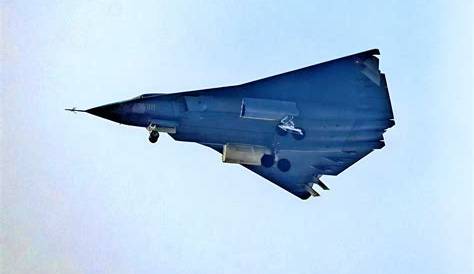
The Chengdu J-36 is a modern Chinese multirole fighter jet designed to enhance the People's Liberation Army Air Force (PLAAF) capabilities. Its advanced features reflect significant advancements in military aviation technology, making it an important player in global air defense. Understanding the J-36's design, operational capabilities, and its role in modern military aviation will provide insights into its significance.
What is the Chengdu J-36 and why does it matter?
The Chengdu J-36 is a contemporary fighter jet developed by China's Chengdu Aircraft Industry Group. It is designed to meet a variety of combat needs, including air superiority and ground attack missions, making it a versatile asset for the PLAAF. The significance of the J-36 extends beyond its technical specifications; it represents China's growing military capabilities and its strategic shift toward self-reliance in defense technology. In a world where air dominance is critical, the J-36 plays a vital role in maintaining regional security and asserting China's presence in international airspace.
What are the key features of the Chengdu J-36?
The J-36 boasts several advanced features that distinguish it from earlier generations of fighter jets. Its design includes a low observable profile, enhancing its stealth capabilities and allowing it to evade radar detection effectively. The aircraft is powered by engines that provide an optimal balance between thrust and fuel efficiency, supporting longer missions without sacrificing speed. Additionally, the J-36 is equipped with advanced avionics, including a multifunction radar system and sophisticated electronic warfare capabilities, which improve situational awareness and combat effectiveness. Together, these elements give the J-36 the agility and responsiveness necessary for modern aerial combat.
How does the J-36 compare to its competitors?
When comparing the J-36 to competitors like the American F-35 and the Russian Su-57, notable differences in design philosophy and intended use emerge. The J-36 emphasizes multirole capabilities for various missions, while the F-35 focuses heavily on stealth and network-centric warfare. The Su-57 prioritizes supermaneuverability and advanced avionics. Although the J-36 may not match the F-35's level of stealth, it offers a competitive edge in payload capacity and operational versatility. Each aircraft has its strengths, but the J-36's unique features position it well within the current market of fighter jets.
What are the operational capabilities of the J-36?
The operational capabilities of the Chengdu J-36 are impressive, particularly regarding speed, range, and maneuverability. The aircraft can reach speeds exceeding Mach 2, making it suitable for high-speed intercepts and ground attack missions. Its combat radius allows it to engage targets at significant distances, crucial for power projection. Maneuverability is another key aspect; the J-36 can perform complex aerial maneuvers that enhance its dogfighting capabilities. However, like all aircraft, its performance can be influenced by factors such as payload and environmental conditions, necessitating that pilots adapt their tactics accordingly.
What advancements can we expect in future models?
Future iterations of the Chengdu J-36 are likely to include several advancements that will further enhance its capabilities. Potential upgrades may encompass improved stealth features, allowing the aircraft to operate more effectively in contested airspace. Avionics enhancements are also expected, integrating artificial intelligence for better decision-making support and advanced sensor fusion. Additionally, advancements in weaponry, such as hypersonic missiles, could be integrated to expand its combat capabilities. These innovations will help ensure that the J-36 remains competitive against emerging threats in military aviation.
Conclusion
To understand the role of the Chengdu J-36 in modern aviation, it's essential to explore its design features and operational capabilities. Consider how it fits within the broader context of military aircraft, including comparisons with competitors. Recognizing its advancements is crucial to appreciating China's strategic military intentions. Doing so will deepen your understanding of not only the J-36 but also the evolution of fighter jets in today's defense environment.
Frequently Asked Questions
What is the primary role of the Chengdu J-36?
The primary role of the Chengdu J-36 is to serve as a multirole fighter jet, capable of engaging in air-to-air combat and ground attack missions. Its versatility makes it an essential asset for the PLAAF.
How fast can the Chengdu J-36 fly?
The Chengdu J-36 can reach speeds exceeding Mach 2, allowing it to engage targets quickly and effectively during combat operations.
What makes the J-36 different from older fighter jets?
The J-36 incorporates advanced stealth features, modern avionics, and enhanced maneuverability, distinguishing it from older fighter jets that may lack these technological advancements.
Is the Chengdu J-36 considered a stealth aircraft?
Yes, the Chengdu J-36 features a low observable design that enhances its stealth capabilities, enabling it to perform missions with reduced radar visibility.
What future improvements are expected for the J-36?
Future models of the J-36 are expected to include enhancements in stealth technology, avionics, and the integration of advanced weapon systems, such as hypersonic missiles.